Dancing Hair: Dress Up
TINYMAX HONGKONG LIMITEDMusic
4.3922.00 Reviews
- Version
- 1.0.99
- Installs
- 50.00M
- Age Rating
- Everyone
Screenshots

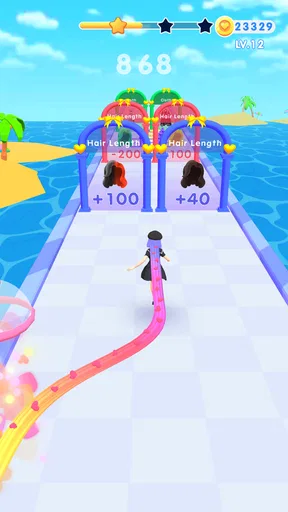
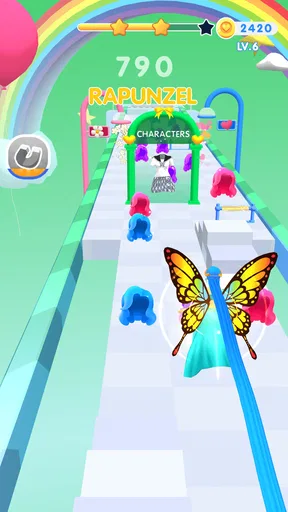
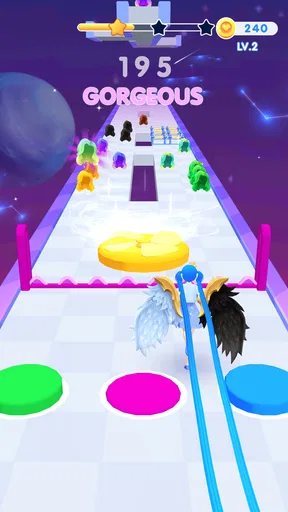
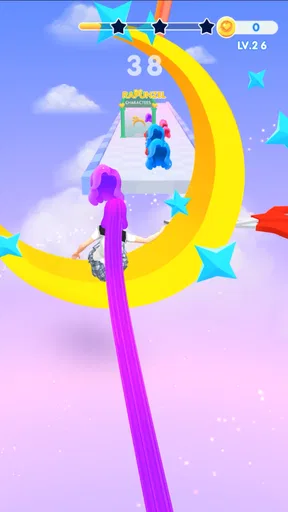
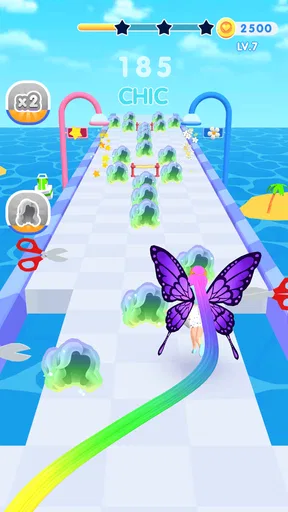
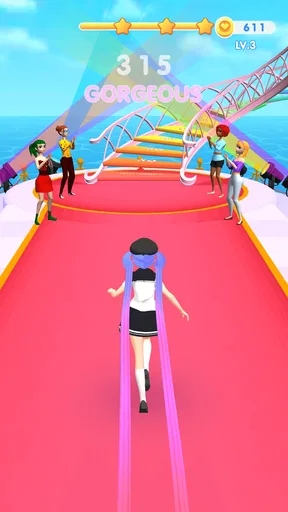
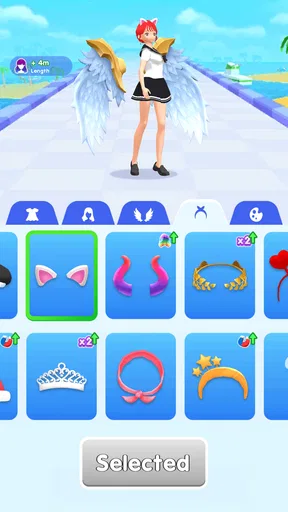
Our Review of Dancing Hair: Dress Up
 Analysis by Appyee
I approached Dancing Hair: Dress Up as a quick music game rather than a traditional fashion title, and that distinction matters. Its central appeal is the combination of rhythm-based movement and a long-haired character walking through a catwalk-style experience. The idea is immediately understandable: follow the beat, keep the performance moving, and enjoy the visual payoff of styling and dancing. I found it most appealing in short sessions, when I wanted something light that could be played without committing to a long story or complicated strategy system.
This is a free game in the music category, developed by TINYMAX HONGKONG LIMITED. It is aimed at Everyone, runs on Android 7.0 and later, and its current version is 1.0.99. The audience is clearly broad: the controls and presentation are designed to be approachable, while the rhythm element gives the experience more energy than a simple dress-up simulator. It has reached over 50 million installs and holds a 4.3 average from around 51 thousand ratings, which suggests that its straightforward format has found a substantial audience.
What I like about the concept is that it does not ask me to learn a large set of rules before I can enjoy it. What I do not like as much is that the same simplicity can feel limiting if I am looking for deep music-game mechanics, detailed outfit management, or a more demanding challenge. The best way to understand it is as a visually playful rhythm experience with fashion flavor, not as a full replacement for a dedicated dress-up game or a precision-focused music title.
How clearly the game communicates what to do
I found the game’s basic goal easy to pick up because its catwalk presentation makes the rhythm-and-movement idea feel intuitive rather than abstract. In this section, I look at how that clarity helps new players get started, and where visual excitement can make the action harder to read. That distinction matters when deciding whether its lively style feels inviting or distracting.
Readability and navigation during a first session
The game’s strongest accessibility quality is its immediate premise. The catwalk framing gives the player a clear mental picture of the objective, and the music connection helps explain why timing matters. I did not need a long explanation to understand that the character’s movement and the rhythm belong together. For younger players or anyone who prefers learning by doing, that is a useful advantage.
The visual focus is also easy to grasp. The character, the path ahead, and the changing performance are the elements that naturally draw attention. In a game built around hair, outfits, and movement, that clarity is important because too many competing decorations would make it harder to notice the action. I found that the experience works best when I concentrate on the central lane and treat the surrounding presentation as atmosphere rather than information.
That said, readability is not only about recognizing the theme. Rhythm games require me to identify timing cues quickly, and visual effects can compete with those cues. Bright colors, movement, and character styling are part of the appeal, but they can also make the screen feel busy during a fast sequence. Players who need strong separation between the playable path and decorative elements may need a short adjustment period before the action feels comfortable.
Navigation outside the active sequence is similarly approachable in spirit. The game is better suited to people who want to tap into a session quickly than to players who enjoy studying menus, comparing complex statistics, or planning a long-term build. I would recommend taking a moment to look at each screen before starting a run, especially if a child is playing, because the visual presentation can make optional choices feel just as prominent as the essential controls.
One practical habit helped me: I focus first on the movement cue and only then on the appearance of the character. It is tempting to watch the hair and costume because they are the most distinctive parts of the presentation, but doing so can pull attention away from the rhythm. Treating styling as the reward for staying engaged, rather than as the primary thing to monitor, makes the game easier to read.
Text, contrast, and the effort of understanding the interface
The game’s idea is more accessible than a text-heavy management title because much of the meaning comes from animation and visual context. Someone who does not want to read long instructions can still understand the broad loop. This is especially useful in a shared household, where one person may explain the goal verbally while another person handles the device.
However, visual simplicity should not be confused with universal readability. Small interface labels, decorative backgrounds, or rapidly changing scenes can still be difficult for players with low vision, visual processing differences, or sensitivity to clutter. I would not choose this game on the assumption that every cue will be equally clear for every player. The safest approach is to test it directly on the intended device and use the largest comfortable display available.
There is also a difference between recognizing an action and performing it at the right moment. A player may understand what the game wants but still struggle to distinguish a cue from the background or to judge its timing. That makes the first few sessions valuable as a personal test. If the sequence feels visually crowded, reducing other distractions in the room can help more than repeatedly restarting the same stage.
Motor and sensory considerations
The rhythm format can be friendly to players who prefer short, direct interactions. I do not have to manage a large virtual keyboard, navigate a complex map, or maintain several systems at once. A person who is comfortable with simple taps and visual timing may find the game easier to approach than a conventional action game with multiple buttons.
At the same time, rhythm play is not automatically low effort. Success depends on reacting at the right time, and repeated tapping can become tiring for players with limited dexterity, tremors, joint pain, or slower reaction speed. The fashion presentation may look relaxed, but the timing demand can still create pressure. I think of it as a game with a gentle surface and a potentially demanding core, depending on the player’s motor control and the pace of the sequence.
For that reason, I would play with the phone supported on a table rather than holding it in midair. This reduces unnecessary grip tension and gives the tapping hand a more stable position. It is a small change, but it makes short sessions more comfortable and helps separate the physical effort of holding the device from the actual interaction.
Sensory comfort is another consideration. Music, motion, colorful character effects, and the repeated rhythm of play are central to the experience. Players who enjoy lively audiovisual feedback will probably find it motivating. Players who are sensitive to flashing visuals, strong color changes, or repeated sound should approach carefully and take breaks. I would also avoid playing in a dark room with the screen at maximum brightness, since the contrast between the environment and the display can make the experience more tiring.
The game is not the best match for someone who wants a quiet, low-stimulation activity. A slower dress-up app may be a better choice for that purpose because it places more emphasis on selecting and arranging clothing than on following musical timing. Conversely, someone who finds static menus boring may appreciate the way this game turns appearance into part of an active performance.
Situational access in everyday use
I can see this working well during a short break, while waiting for an appointment, or when I want a compact game that does not require a long narrative commitment. The catwalk structure makes it easy to understand the mood within moments, and the music-game format gives a session a clear beginning and end. It is also suitable for casual handoffs between friends or family members because the basic idea is easy to explain.
A realistic household scenario would be a parent letting a child try it for a few minutes while the parent handles a nearby task. The Everyone age rating makes the game broadly suitable from a content perspective, but I would still stay aware of how long the child plays and whether the pace is comfortable. The bright presentation can be engaging, yet a child who becomes frustrated by missed timing may need encouragement or a different type of game rather than repeated pressure to improve.
It can also work as a social viewing game. One person can play while another comments on the hair and outfit changes, which gives the fashion side more value than it would have in solitary play. I would not describe it as a deep multiplayer experience, though. Its appeal in a group comes from watching and discussing the performance, not from assuming that everyone is participating in a shared competitive system.
For travel, the short-session design is convenient, but I would consider the environment. On public transport, movement and background noise can make timing harder. In a quiet room, the audio cues may be easier to follow, while in a busy place I would rely more heavily on the visual rhythm. Anyone who experiences motion discomfort from animated screens should also test a brief session before planning to use it for a long journey.
Device size changes the experience as well. A larger screen can make the character and action easier to distinguish, while a smaller phone may feel more immediate but leave less room for visual separation. I would not assume that the same level of comfort transfers from one device to another. If a player has difficulty seeing or tapping accurately, trying a different screen size is a sensible first step.
Remaining barriers and the limits of the format
The most important barrier is the relationship between timing and enjoyment. If I miss a rhythm cue, the game can feel less like creative styling and more like correcting mistakes. That may disappoint players who arrive expecting a relaxed dress-up experience. The title’s fashion theme is inviting, but the music-game structure still asks for attention and coordination.
Another limitation is depth. Compared with a dedicated dress-up game, this experience is less likely to satisfy someone who wants extensive control over every garment, a detailed character creator, or a carefully organized wardrobe. Compared with a serious rhythm game, it may feel less rewarding to someone who wants demanding note patterns, advanced scoring, or a strong sense of musical mastery. Its middle ground is approachable, but that also means it may not become a long-term favorite for specialists in either category.
The free entry point is helpful, especially for families and curious players who want to test the concept before spending anything. The game includes in-app purchases ranging from $1.49 to $39.99 per item, so I would treat purchase controls as part of the setup process when a child uses the device. A free download does not automatically mean that every optional choice will remain outside the spending conversation. I prefer deciding in advance whether purchases are allowed and keeping the game’s cosmetic appeal separate from the expectation of buying more.
This is also where the game’s visual rewards can create friction. When appearance is a major part of the motivation, players may naturally want more ways to personalize the character. That is enjoyable when kept within a clear budget, but it can become distracting if the player starts measuring progress mainly by what is still unavailable. I get more from the game when I treat new looks as occasional bonuses rather than as the definition of success.
Players who need adjustable timing, simplified input, reduced motion, or highly customizable visual settings should test the game personally rather than assuming those accommodations are available. I would not recommend it as the first choice for someone whose access needs depend on specific control remapping or detailed sensory options. A game with openly documented accessibility settings may be a safer fit in that situation.
There is a subtler barrier for players who process information slowly. The game’s central loop may be easy to understand, but the moment-to-moment decisions still arrive in time with the music. A player can enjoy the character and theme while finding the pace uncomfortable. Playing in short attempts, using a stable posture, and removing nearby distractions may help, but those changes cannot turn a timing game into a turn-based one.
Who will enjoy it most
I would recommend this game to someone who likes bright character presentation, musical timing, and quick rounds. It is particularly suitable for players who want a low-commitment activity with a clear visual identity. The combination of catwalk energy and rhythm gives it more movement than a standard outfit-selection game, while keeping the premise easier to grasp than a large adventure or strategy title.
It is also a good candidate for casual family play, provided the player is comfortable with the pace and an adult manages spending expectations. The Everyone rating supports a broad audience, but age suitability does not tell me whether every child will enjoy the coordination requirement. Some will find the rhythm motivating; others may prefer a game where creativity is not tied to reaction speed.
I would steer away from it if the main goal is serious music practice, highly precise rhythm competition, or extensive fashion design. In those cases, a specialized rhythm game or a deeper dress-up title will probably offer more satisfying tools. I would also look elsewhere if visual stimulation and repeated tapping are uncomfortable, because those are not minor details here; they are part of the game’s identity.
The developer, TINYMAX HONGKONG LIMITED, has positioned the experience around an immediately recognizable blend of music and appearance. The result is easy to pick up, but its long-term value depends on whether that blend continues to feel rewarding after the novelty of the first performances fades. I found it more convincing as a repeatable casual diversion than as a game I would play for extended sessions every day.
My inclusive verdict
After spending time with it, I see Dancing Hair: Dress Up as a cheerful music game that makes a strong first impression through movement, hair styling, and catwalk presentation. Its broad age rating, free price, and simple premise make it easy to try. The current version is 1.0.99, and the large install base shows that the format has wide appeal, but popularity should not be mistaken for a guarantee that its rhythm demands will suit every player.
The key question is whether the player wants fashion rewards delivered through musical timing. If the answer is yes, the game offers a distinctive way to turn a character’s appearance into part of the action. If the answer is no, the same design may feel like an unnecessary obstacle between the player and the styling they came to enjoy.
My practical recommendation is to begin with a short session on the device the intended player will actually use. Check whether the cues remain easy to distinguish, whether tapping feels comfortable, and whether the audiovisual activity is pleasant rather than tiring. For a child, establish purchase boundaries before handing over the phone. For a player with motor or sensory needs, treat personal testing as essential, because the game’s accessibility depends heavily on how that individual experiences timing, motion, and visual density.
Overall, I would install it for casual rhythm fans, families looking for a colorful game to sample together, and anyone curious about a fashion game that does not stay static. I would skip it in favor of a quieter dress-up experience for relaxed creativity, or a more specialized music game for serious timing practice. Within its intended middle ground, it is enjoyable and easy to understand, but its inclusive appeal is strongest when players are comfortable with the sensory and motor demands built into the catwalk.
Verdict
Strengths of Dancing Hair: Dress Up
- Simple controls make styling and dancing easy for younger players.
- Bright visuals and animated characters create an appealing presentation.
- Quick makeover sessions are suitable for short play breaks.
- Dress-up choices encourage creativity and personal style.
- The game is easy to understand without lengthy tutorials.
Limitations of Dancing Hair: Dress Up
- Gameplay may feel repetitive after completing several makeovers.
- Some items or features may require in-app purchases.
- Frequent ads can interrupt the styling and dancing experience.
- Limited challenge may not satisfy players seeking deeper gameplay.
- Performance can vary on older phones or lower-end devices.
Other Releases by TINYMAX HONGKONG LIMITED
View All
Piano Star
Music4.3

Dancing Dress - Fashion Girl
Music4.3
Similar Picks in This Category
View All
Tiles Hop Music & Ball Game
AMANOTES PTE. LTD.4.3

Magic Tiles 3™ - Piano Game
AMANOTES PTE. LTD.4.6

Real Piano
Bilkon3.7

Piano Game: Classic Music Song
Dream Tiles Piano Game Studio4.0

Smash Colors: Music Ball Rush
BADSNOWBALL HONGKONG LIMITED4.2

Piano Music Go-EDM Piano Games
Joy Journey Music Games4.5
Frequently Asked Questions
What is Dancing Hair: Dress Up?
Dancing Hair: Dress Up is a casual fashion and makeover game centered on creating stylish characters for dance-themed performances. Players can customize outfits, hairstyles, colors, accessories, and overall looks before sending their characters into entertaining dance scenes. It is designed for short, relaxing play sessions and combines dress-up creativity with simple, visually focused gameplay rather than complex controls or strategy.
How does the gameplay work in Dancing Hair: Dress Up?
The main gameplay loop involves choosing and combining fashion items to create a complete appearance for your character. Depending on the level or activity, you may select hairstyles, dresses, shoes, accessories, and other cosmetic details, then watch the character perform or participate in a dance presentation. The controls are generally easy to understand, making the game suitable for casual players and younger audiences.
Is Dancing Hair: Dress Up free to download and play?
Dancing Hair: Dress Up can generally be downloaded without an upfront payment, although the exact availability and pricing may vary between Android and iOS. Like many free dress-up games, it may include optional in-app purchases for additional items, premium content, or faster access to certain features. Check the store listing and in-game purchase settings before downloading, especially if children use the device.
Does Dancing Hair: Dress Up require an internet connection?
Some basic dress-up activities may work without a continuous internet connection, but certain features can depend on online access. Advertisements, optional rewards, updates, cloud-related functions, or newly released content may not be available offline. For the most reliable experience, launch the game while connected to the internet first and review its behavior in airplane mode before assuming every feature can be used offline.
Is Dancing Hair: Dress Up suitable for children?
The game is likely to appeal to children and players who enjoy colorful fashion, character customization, and simple dance-related activities. However, parents should review the age rating, advertising content, privacy information, and available in-app purchases on the relevant app store. If children are playing, parental controls are recommended because free games may display ads or offer optional purchases during normal gameplay.
Play our best games!


